Song of a Mermaid
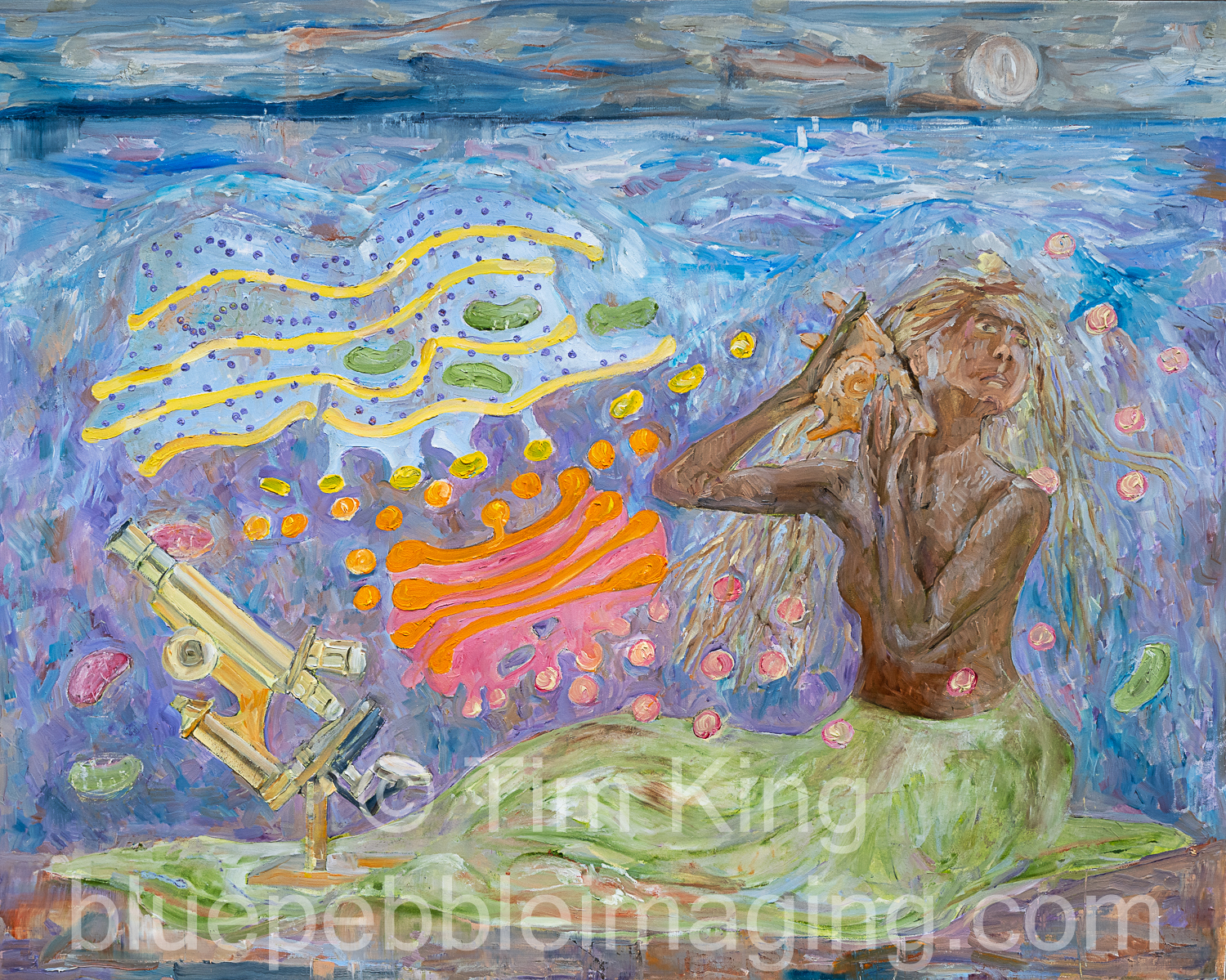
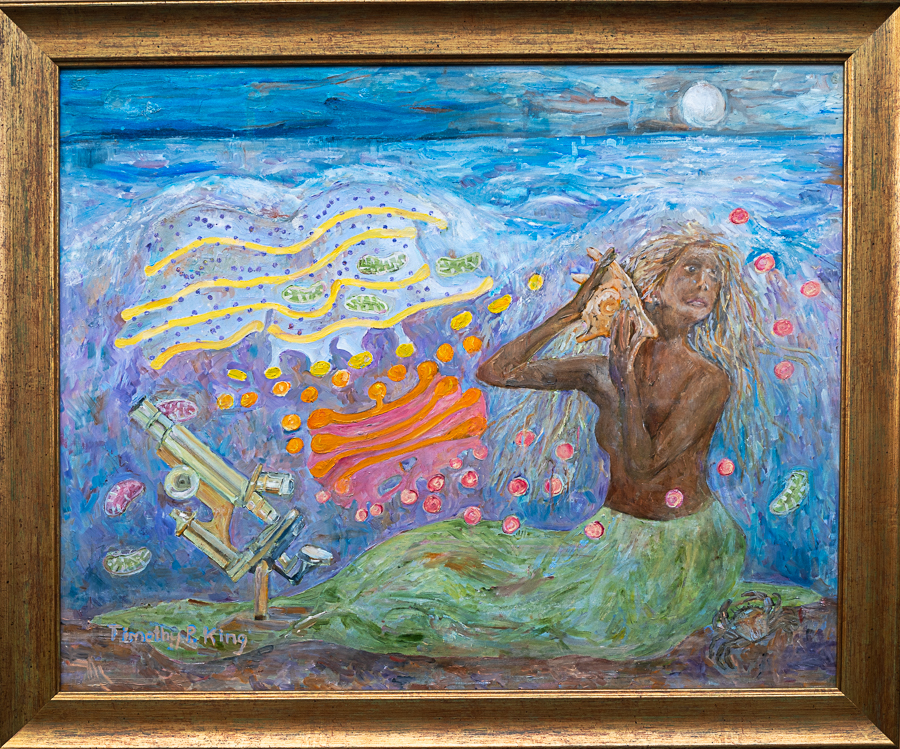
This painting is about the roots of brain cell structural biology, that today influence the thinking of many researchers, including those who seek cures for Parkinson’s disease. When he collected his Nobel prize for Physiology or Medicine in 1974, George Palade spoke about being drawn to images of cellular membranes. ‘Its pictures had for me the effect of a song of a mermaid: irresistible and half transparent.’ Here, Palade’s favourite structures are depicted in blue and yellow, beneath ocean waves.
The painting also features my own vivid dream about a ‘Song of a Mermaid.’ In my research, (which in no respect warrants any sort of a prize), I was captivated by other microscopic sub-cellular structures called ‘Golgi bodies’, named after 1906 Nobel prize-winner, Camillo Golgi. Here, Golgi’s favourite organelle is depicted in orange and pink alongside a shoal of formed Golgi vesicles. In my dream, the cellular environment is again moved to the salty domain of a mermaid, where scale and proportions are obscure. In ‘reality’, ten thousand Golgi vesicles would fit onto a pin head!
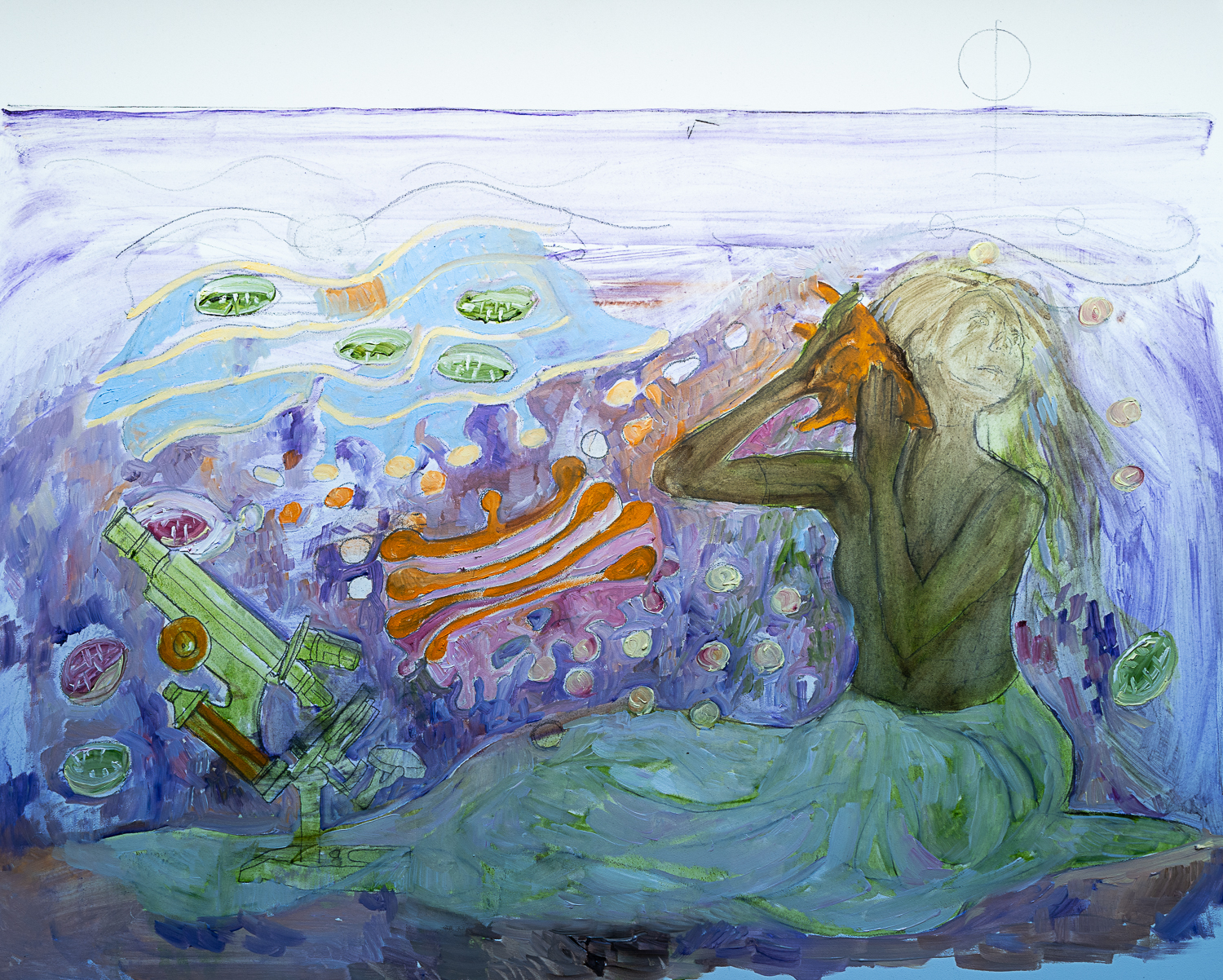
Earlier versions of the painting